Tuesday, February 24, 2026
Digital Edition


'Coming back to this orchestra feels like a natural step,' Martyn Brabbins on SOI's Spring 2026.
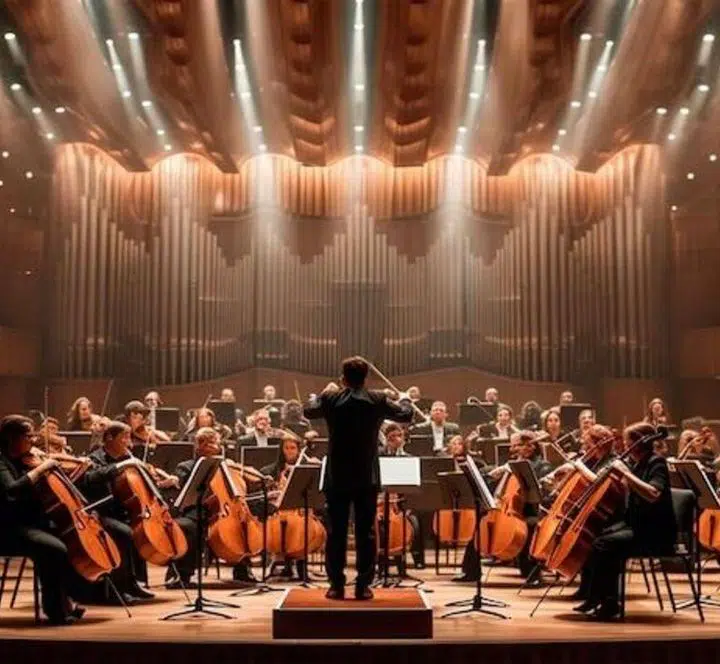
We sit down with SOI co-founder Khushroo Suntook and Chief Conductor Martyn Brabbins to explore 20 years of the orchestra's journey, its landmark Spring 2026 repertoire, and the future of orchestral
 "Orchestra")
Martyn Brabbins

 "Adam Roberts")
Amid the grandeur of the Symphony Orchestra of India’s Spring 2026 Season, we found ourselves in conversation with two people who have shaped its journey: Khushroo N. Suntook, the visionary co-founder of SOI and Chairman of the NCPA and Martyn Brabbins, the orchestra’s freshly appointed Chief Conductor.
Co-founder Khushroo Suntook and Chief Conductor Martyn Brabbins on SOI’s two decade-long journeyThis season was a feast for the senses—opening with the Beethoven Symphony Cycle, moving effortlessly from the bold energy of Symphonies No. 1 and 5 to Mussorgsky’s haunting Prelude to Khovanshchina, Holst’s cosmic The Planets, and Mahler’s deeply emotive Songs of a Wayfarer with mezzo-soprano Dame Sarah Connolly. Shostakovich’s intense Symphony No. 10 stirred the soul, while Italian tenor Davide Giusti brought intimacy and elegance through Tosti’s lyrical songs. Under Carlo Rizzi’s baton, the orchestra journeyed through masterworks by Dvořák, Sibelius, Rossini, Puccini, and Wagner—a musical tapestry that turned Mumbai into a stage for some of the world’s most beloved orchestral stories.
A legacy two decades in the making
Khushroo Suntook reflected on the early challenges of bringing orchestral music to Mumbai audiences, “In the early years, orchestral music did not enjoy broad public support. The audience largely consisted of professionals—lawyers, doctors, and a small, informed circle that regularly attended concerts.”
He recalled an anecdote illustrating the period’s informal learning environment, “When Mehli Mehta was conducting a rehearsal of the Brahms concerto, one of the violinists noticed his partner had already lowered his instrument. The opening of Brahms is famously complex, so he asked what was going on. The reply was, ‘Thank you, I’ve finished.’ That kind of misunderstanding was not uncommon then.

 "Defence")
Through persistence, vision, and educational initiatives like the SOI Music Academy, Suntook helped nurture an ecosystem for classical music that now thrives nationally and internationally.
A new era under Martyn Brabbins
Martyn Brabbins, taking the helm as Chief Conductor, described the significance of his debut, “It’s very special, of course. I first came to work with the orchestra about ten years ago, and I’ve returned several times since. Over these years, I’ve seen the orchestra evolve and develop into what it is today—a truly fabulous ensemble. Coming back now as chief conductor, seeing familiar faces, musicians, and friends, feels like a very natural step, both for them and for me. I feel very privileged and proud to be standing on stage with them.”
The season marked Brabbins’ first opportunity to guide the orchestra through ambitious repertoire while building on the foundation laid over the past 20 years.
Musical excellence and collaboration
Discussing the orchestra’s evolving standards, Brabbins said, “They can expect wonderful music and wonderful music-making—that’s what we do. The orchestra is evolving in a very positive way, with a strong consistency of quality and a high level of musicianship. Many of the musicians live and work here in Mumbai throughout the year… This consistency—of people and of approach—allows the orchestra to grow steadily and positively. I’m very happy to be here.”
Suntook mirrored this sentiment, emphasizing the importance of mentorship and exposure to global music, “Listening sessions with maestros like Paul Zils gave us insight into European musical life. These experiences shaped our understanding and helped us nurture musicians capable of performing at the highest level.”
Adam Roberts

 "Adam Roberts")

First Published: Feb 23 2026 | 4:32 PM IST
In this article :